
How sponsorable are your armpits?
“Oh, that’s absolutely brilliant” I shouted at the TV, as the Netherlands took on Japan in the World Cup last night.
You might imagine this came in response to some exquisite, defence-splitting through-ball or screaming volley into the top corner. Or perhaps an impeccably timed last-ditch tackle, or a flying finger-tip save from the goalkeeper.
Nope. None of these.
Instead, the cause of my involuntary exclamation was the fourth official lifting up their board to show how many minutes of added time were to be played.
So, what about this mundane event had me scrambling for my laptop to hammer out this email to you?
Well, take a look…
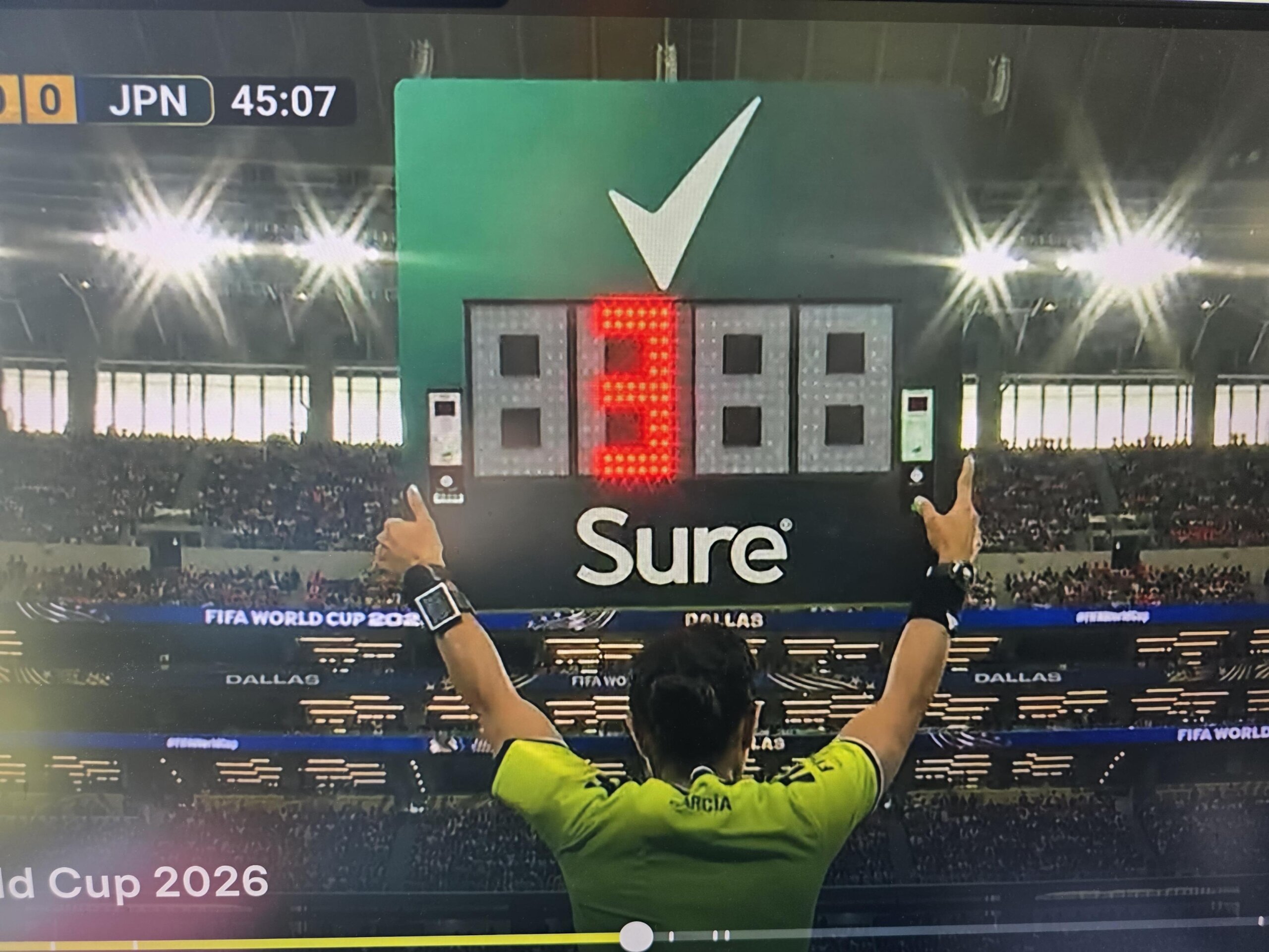
Screenshot of TV coverage of Netherlands v Japan in the FIFA World Cup. The image shows an official in a yellow shirt with arms outstretched, holding up a large digital display with the number 3 above their head. The board is surrounded by Sure’s logos (the word Sure and a white tick).
The football World Cup is always a battle for attention for advertisers and that’s been dialled up to eleven this year. Companies like Sure (also called Rexona and Degree in some countries) are paying huge sums to be official partners of the tournament, seeking to capture their share of the estimated 5 billion-strong global audience.
And it’s not just official partners they’re competing against. Rival companies are also trying to capitalise on World Cup fever, linking their adverts and content to try and piggyback on the excitement and engagement generated by football’s biggest competition.
In this competitive environment, companies agonise over when, where and how to get their brand out there.
And boy have Sure smashed it here.
Because, for me, this seemingly simple logo placement represents a perfect synergy between platform, message and opportunity.
Let’s take a closer look at what’s going on:
The Message: When it comes to communicating Sure’s core value proposition, the sight of the fourth official – confidently standing there with arms raised and pits exposed, not a sweat mark in sight – is a brilliant example of show-don’t-tell. The visual image is understated but clear – only Sure deodorant gives you the confidence to share your armpits with the world.
The image is clear enough on its own, but when you factor in Sure’s wider promotional activity (including their World Cup-inspired TV ads) the message is reinforced even further.
The Platform: The use of the fourth official’s board is vital to illustrating the core value proposition but that’s not the only reason it’s an inspired choice.
There’s no shortage of sponsorable real estate within a football stadium, and spaces like the digital advertising hoardings or pitch-side logos might seem a more obvious choice. However, each of these is competing for attention – both with other the other sponsors and with the action on the pitch.
The fourth official’s board is different. For non-football fans, the fourth official’s board is used to signal substitutions and to announce how much added time will be played in each half. This means the combined usage time during a 90-minute match is only about 2 minutes. At first glance that’s not great, especially when you consider that most of the 60-80,000 people in the stands will be too far away to see the logo underneath.
But it’s not for them.
Because Sure knows that real prize is the millions of people around the world watching at home. And they also know that the fourth official’s board is given prominent TV coverage nearly every time it appears – usually through a close-up (as in the image above). In placing their logo on the fourth official’s board, Sure have guaranteed they will reach the global audience watching on TV, at a time where there will be no other competition for their attention.
The Timing and Opportunity: Providing companies with opportunities to use sporting events to get their message in front of audiences can come at the expense of the wider audience experience. Initiatives that hamper the viewer’s experience, distract them from the game or disrupt the flow of the match can result in the brand being perceived negatively. However, Sure’s placement fits within the natural flow of the match. If their logo wasn’t there, the fourth official would hold the sign in exactly the same way. This enables them to get their message across without risking the goodwill of their target audience.
Now, I know most of us aren’t don’t have the luxury of a global sporting event to build our sponsorship approaches around. So, what can charity fundraisers learn from this?
When we’re thinking of sponsorship benefits for our own organisations, it can be easy to default to the obvious – sponsors’ logos on promotional material, handing out free samples or discount codes, promoting adverts or sponsors messages to our mailing lists etc.
But if the aim of the sponsorship (as Sure’s Global Brand Director describes) is to “steal” customers from outside (either attracting new consumers into your market for the first time, or stealing them from competing companies), these generic benefits make it nigh on impossible to stand out from the competition.
Which means these generic benefits also make it nigh on impossible for your sponsorship opportunity to stand out from the competition.
Rather than sticking with the “old reliables”, next time you’re putting together sponsorship ideas, think about the following questions:
1) Who is the company trying to reach and where are their eyeballs?
Across your organisation it’s likely you have lots of ways to get messages in front of different audiences. Like the fourth official’s board, your most effective ones might not be the most obvious – and they might not be the same for each company. For each new proposal, consider:
- Who is your potential sponsor trying to reach, and how does that overlap with your audience?
- What is your audience engaging with at different times? When do you have their attention? What touchpoints do you control?
- When are the moments when your audience will be especially receptive to your potential sponsor’s message?
One of my favourite arts-based examples of this is this partnership between Queens Theatre and Côte restaurants. The theatre uses the back of the ticket envelope to show where there are three Côte restaurants nearby, while also including an offer for a free drink if you dine there before the show. The exclusive use of the envelope space blocks out any other competition, while also ensuring the message is present at the key times theatre-goers will be making plans about their trip.
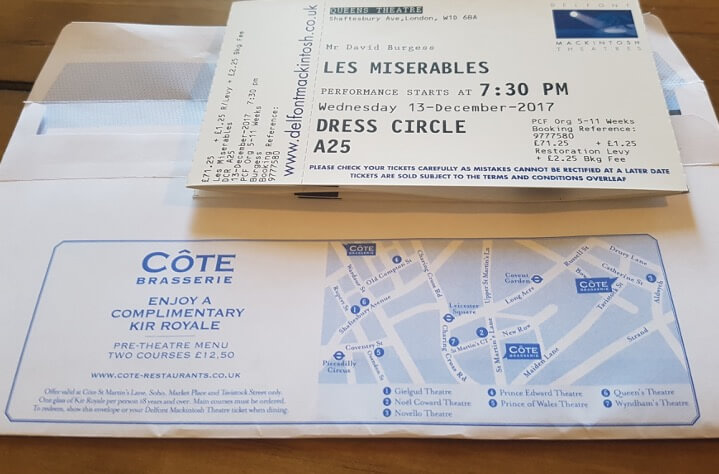
Theatre tickets on top of an envelope. On the back of the envelope is a map showing the locations of three Côte Brasserie restaurants. The advert also has an offer for a complimentary Kir Royal for people ordering the pre-theatre menu.
2) How can we bring their core value proposition to life?
A company or product’s value proposition is the benefit (or value) they bring to their customer or consumer. It helps the customer to understand what’s in it for them, and why they should choose that company or product over others. Before developing ideas, consider:
- What is their core proposition, and how does it differ to their competitors?
- What need do they exist to solve? What motivates their customers to choose them?
- What is their brand and tone of voice? How do they present themselves?
Understanding the message they are trying to convey means you can start thinking of powerful ways to bring this to life. Rather than starting with a pre-existing idea of the benefits your organisation could offer, get creative! Imagine you work in the marketing or brand team at the company. With a blank page, what concepts or ideas would you come up with?
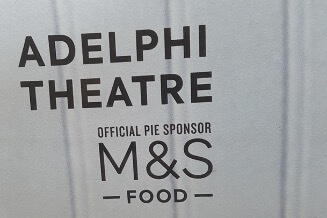
In the arts world, I love the way the Adelphi Theatre positioned M&S Food as the Official Pie Sponsor of Waitress the Musical. (For those who don’t know the musical, the story centres around waitress and pie-making extraordinaire Jenna, who’s pies are so good they could “win contests and ribbons and things”). It would have been easy enough to position M&S Food as Production Sponsor or Production Supporter. However, linking their support specifically to the pies helps make a connection for the audience between M&S Food and award-winning quality.
3) How can you reinforce the message?
As mentioned above, placing their logo on the fourth official’s board is not the only way Sure are promoting their product during the World Cup. TV adverts, social media content, engaging with creators, giant deodorant cans and pop-up experiential venues have all been developed to reinforce the message that Sure/Rexona “won’t let you down”. (You can read more about their approach in this article from Little Black Book – https://lbbonline.com/news/rexona-world-cup-2026-emily-heath)
Rather than presenting potential sponsors with a piecemeal list of benefits that operate independently of each other, consider how different benefits can work together to reinforce the messaging your potential sponsor is trying to convey. Taking a holistic approach will mean you can present your potential sponsor with something that is greater than the sum of its parts.
Which partnerships and ads will catch your eye this summer?
The World Cup is young and I’m sure we’re going to see lots more examples of companies taking creative approaches to getting their message across. If you see any that stand out for you, I’d love to hear about them!
Looking for more like this?
If you’d like more ideas, inspiration and insight like this delivered straight to your inbox, why not subscribe to our (semi) regular email, Apollo’s Muse? Simply pop your details in the form below.